Wild at Heart: How Sourdough Starters Are Transforming Laminated Pastry in American Bakeries

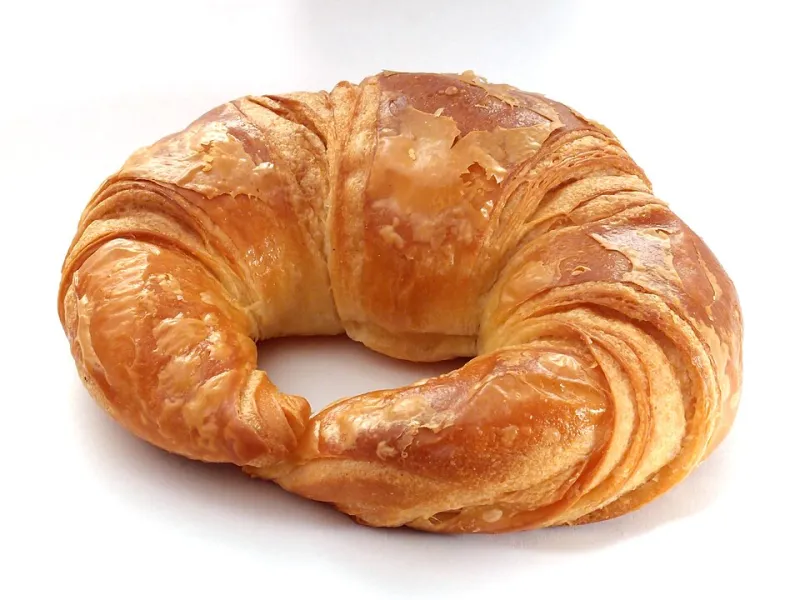
Photo: sourdough starter laminated croissant dough layers artisan bakery butter folding, via androidpc.es
The croissant, in its most idealized form, is already a study in extremes: hundreds of paper-thin butter layers pressed into an architecture of improbable delicacy, demanding cold precision and patient repetition. To introduce a wild-yeast starter into this already exacting process might seem, to the uninitiated, like an act of culinary hubris. To those who have tasted the results, it is nothing short of a revelation.
Across the United States, a small but increasingly influential group of professional pastry chefs and serious home bakers is doing exactly that—applying the fermentation logic of sourdough bread to laminated doughs with striking results. The croissants, Danish, and kouign-amann emerging from this movement carry a flavor complexity that commercial yeast cannot approach: a gentle tang, a deeper wheat character, and a lingering finish that invites the kind of slow, contemplative consumption that pairs naturally with a carefully brewed cup of tea.
Why Lamination and Wild Yeast Were Long Kept Apart
The conventional wisdom in pastry education has long held that laminated doughs and sourdough starters are fundamentally incompatible. The argument is straightforward: wild yeast is unpredictable, and lamination demands control. The extended fermentation times required by a natural starter risk softening the gluten structure and destabilizing the butter layers that give a croissant its signature honeycomb interior.
These concerns are not without merit. But they are also, according to practitioners who have spent years refining the technique, surmountable.
"The challenge is that you're working with a living system inside one of the most technically demanding doughs in pastry," says Claire Beaumont, executive pastry chef at Folia Bakehouse in Seattle. "But once you understand how to manage the fermentation temperature and timing, the starter becomes an asset rather than a liability. The flavor development is extraordinary."
Beaumont's naturally leavened croissants have developed a devoted following among Seattle's food community, distinguished by a pronounced butterscotch depth and a crust that shatters with an audibility she describes, with characteristic understatement, as "satisfying."
The Science Beneath the Layers
To understand why wild yeast produces superior flavor in laminated doughs, it helps to consider what fermentation actually does to a dough over time. Commercial yeast (Saccharomyces cerevisiae) is selected for speed and reliability, producing carbon dioxide efficiently but contributing little in the way of flavor compounds. A healthy sourdough starter, by contrast, hosts a complex community of wild yeasts and lactic acid bacteria working in concert.
The bacteria produce both lactic and acetic acids during fermentation, lending the finished pastry a nuanced tang—lactic acid contributing a softer, yogurt-like note, acetic acid a sharper edge. Concurrently, long fermentation breaks down complex starches and some gluten proteins, resulting in a more digestible product that many individuals with mild gluten sensitivity find they tolerate more comfortably than commercially leavened alternatives.
The Maillard reaction—the browning process responsible for crust color and toasty flavor—is also enhanced by the presence of additional sugars produced during extended fermentation, contributing to the deep, amber caramelization that distinguishes a naturally leavened croissant from its commercial-yeast counterpart.
A Realistic Timeline
For home bakers considering this path, candor about time investment is essential. A naturally leavened laminated dough cannot be rushed, and attempting to compress the process typically results in the very failures that gave the technique its forbidding reputation.
A practical approach proceeds as follows:
Day One: Refresh your starter in the morning. By evening, prepare the détrempe—the initial dough incorporating flour, water, salt, and a levain (a portion of active starter built from your mother culture). Allow the dough to ferment at cool room temperature—ideally between 68°F and 72°F—for four to six hours before refrigerating overnight.
Day Two: Perform the lamination—incorporating the butter block and executing the series of folds that create the dough's layered structure. Return the dough to the refrigerator between each fold to maintain butter integrity. Complete three to four folds across the day, then refrigerate overnight.
Day Three: Shape, proof, and bake. The proof stage is where wild yeast demands the greatest vigilance. Rather than timing the proof by the clock, observe the dough: it should appear visibly puffed and wobble gently—almost like set gelatin—when the pan is nudged. Under-proofed dough will yield a dense interior; over-proofed dough will collapse in the oven.
Troubleshooting the Most Common Challenges
Butter breakage during lamination is almost always a temperature problem. If the butter shatters rather than bending pliably when folded, it is too cold. Allow the butter block to temper slightly—it should flex without cracking—before proceeding.
A dense, gummy interior typically indicates insufficient proofing or a starter that was not sufficiently active at incorporation. Ensure your levain passes the float test before use, and do not rush the final proof.
Excessive sourness can result from over-fermentation or from a starter with a high acetic acid profile. Shorter bulk fermentation times and a starter maintained at slightly warmer temperatures will shift the balance toward lactic acidity and a milder flavor.
Regional Innovators to Know
Beyond Beaumont's work in Seattle, several other American practitioners are advancing this discipline with notable distinction. In Brooklyn, New York, Sébastien Graux of Atelier Mie has built a following for his naturally leavened kouign-amann, a Breton pastry whose caramelized sugar crust achieves a complexity he attributes entirely to the extended fermentation of his decade-old starter. In Nashville, Tennessee, Lena Cho of Wren Provisions has adapted the technique to Danish doughs, producing laminated pastries filled with seasonal fruit that carry a depth of flavor she describes as "closer to bread than to pastry—in the best possible sense."
Tea Pairings That Illuminate the Ferment
The flavor profile of a naturally leavened laminated pastry—its tangy undertone, its caramelized crust, its lingering umami quality—creates a distinctive set of opportunities for tea pairing.
A lightly oxidized oolong, such as a Taiwanese Baozhong, mirrors the pastry's floral and slightly acidic notes without competing with its richness. The two seem to converse rather than overlap.
For a more assertive pairing, a Yunnan Dian Hong black tea—with its characteristic sweet, malty, and occasionally cocoa-forward profile—stands up confidently to the butteriness of a croissant while allowing the fermentation character to register clearly.
Perhaps most intriguingly, a Japanese hojicha—roasted green tea with a warm, toasty, and subtly smoky character—creates an almost seamless dialogue with the caramelized crust of a naturally leavened pastry, each element reinforcing the other's depth.
Patience as Ingredient
What unites the bakers advancing this movement is not merely technical skill but a particular philosophical orientation toward time. In an era of convenience and immediacy, choosing to spend three days on a single batch of croissants is itself a statement—one that aligns naturally with the ethos of slow tea preparation, of attentive sourcing, and of the belief that flavor, at its most profound, cannot be hurried. The wild-yeast croissant is, in this sense, not simply a baking technique. It is a practice.