Ancient Grains, Extraordinary Pastry: The Heritage Wheat Revival Reshaping American Baking

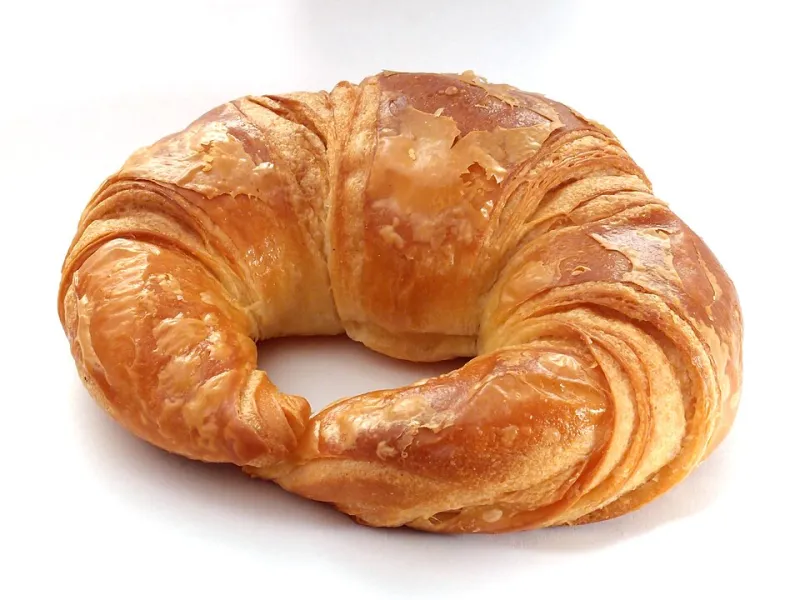
Photo: Kevin Philipson, CC BY-SA 4.0, via Wikimedia Commons
Walk into any serious artisan bakery in the United States today and you are likely to encounter a menu that reads almost like a field guide: Red Fife sourdough, Emmer croissants, Einkorn shortbread, Sonora wheat tart shells. These are not marketing flourishes. They are the visible signs of a fundamental shift in how a growing community of bakers thinks about flour — not as a neutral medium, but as an ingredient with history, character, and flavor of its own.
Heritage wheat varieties, many of them cultivated for centuries before the industrialization of agriculture rendered them commercially unviable, are making a decisive return. Specialty millers from Vermont to Washington State are sourcing and stone-milling these grains, and the bakers who have begun working with them report that the experience changes not merely the flavor of their pastry, but their entire understanding of what baking can be.
What Makes a Wheat "Heritage"?
The term encompasses a broad range of varieties, but heritage or heirloom wheats are generally understood to be those cultivated before the mid-twentieth century introduction of semi-dwarf, high-yield varieties that now dominate commercial agriculture. These older grains were bred for flavor, resilience, and adaptability to specific regional climates — qualities that were gradually sacrificed in favor of yield, uniformity, and compatibility with industrial milling.
Among the most compelling varieties currently available to American bakers:
Red Fife is perhaps the most celebrated. A Canadian heritage wheat with roots in nineteenth-century Ontario, Red Fife produces a flour with a warm, nutty sweetness and a subtle earthiness that makes it extraordinary in laminated doughs. Its slightly lower gluten strength than modern bread wheat requires some adjustment in technique, but the reward in flavor is significant.
Emmer, one of the earliest cultivated wheats in human history, offers a deep, almost mineral complexity with notes of dried fruit and toasted grain. Its dense, protein-rich structure makes it particularly well-suited to tart shells and shortcrust pastries, where its flavor can anchor richer fillings without being overwhelmed.
Einkorn, the most ancient of cultivated wheats, is lower in gluten and higher in carotenoids than modern varieties, lending a golden color and a delicate, buttery flavor to baked goods. It performs beautifully in financiers, madeleines, and other small cakes where tenderness is the primary objective.
White Sonora, a variety brought to the American Southwest by Spanish missionaries in the seventeenth century, produces a soft, fine flour with a mild sweetness ideally suited to pie crusts, galettes, and delicate pastry work.
The Miller's Perspective
The revival of heritage wheats would not be possible without the network of small-scale specialty mills that have emerged over the past decade to bridge the gap between heritage grain farmers and bakers. These millers are, in many respects, the translators of this movement.
Millers working with heritage varieties consistently emphasize that stone milling — the method used before steel roller mills became standard — preserves the bran, germ, and endosperm of the wheat berry in proportions that retain both nutritional content and flavor complexity. The resulting flour is more perishable than commodity flour and should ideally be stored in a cool environment and used within a few weeks of milling. For bakers accustomed to purchasing flour by the fifty-pound bag and storing it indefinitely, this represents a genuine shift in practice.
Many specialty mills now offer direct-to-consumer purchasing with detailed tasting notes and baking guidance for each variety — a level of transparency that would have been unthinkable in the commodity grain market a generation ago. Mills such as Anson Mills in South Carolina, Barton Springs Mill in Texas, and Cairnspring Mills in Washington State have become essential suppliers for bakers serious about this work.
Texture, Flavor, and the Challenge of Laminated Doughs
Working with heritage wheats in pastry — particularly in the demanding context of laminated doughs like croissants and kouign-amann — requires a recalibration of expectations and technique. The gluten networks formed by heritage varieties behave differently from those of modern bread flour. They are often more extensible and less elastic, meaning the dough may relax more readily and require longer resting periods between folds.
For croissants made with a blend of Red Fife and a small proportion of modern high-protein flour, the result is a pastry with a slightly more open, irregular crumb than the precise honeycomb of a purely modern-flour croissant — but with a flavor that is markedly richer, with a toasted grain quality that lingers well beyond the last bite. Many bakers find this trade-off not merely acceptable but preferable.
For tart shells and shortcrust applications, Emmer flour requires slightly less water than modern flour due to its denser protein structure, and the resulting pastry has a pleasingly sandy texture that holds its shape beautifully against both custard and fruit fillings. An Emmer shell filled with a honey-almond frangipane is a study in complementary earthiness — the grain and the nut in quiet conversation.
Sourcing and Getting Started at Home
For the home baker eager to explore heritage wheats, the practical barriers are lower than they might appear. Several specialty mills ship nationwide, and a small initial investment in two or three varieties will provide enough material for meaningful experimentation.
A few practical recommendations:
- Begin with a blend. Substituting twenty-five to thirty percent of the all-purpose flour in a trusted recipe with Red Fife or Einkorn is an accessible entry point that introduces heritage grain flavor without requiring a complete overhaul of your technique.
- Adjust hydration thoughtfully. Heritage flours often absorb liquid differently than commodity flour. Start conservatively and add liquid gradually, observing the dough's behavior rather than adhering rigidly to a recipe's stated quantity.
- Note the flavor evolution. Heritage grain pastries frequently taste better the day after baking, as the complex flavor compounds continue to develop. Plan your tasting accordingly.
- Store flour carefully. Because stone-milled heritage flours retain their germ and natural oils, they are best kept refrigerated or in a cool pantry and used within four to six weeks of the milling date.
A Flour Worth Knowing
The return of heritage wheat to the American baker's pantry is not nostalgia for its own sake. It is an expression of the same values that drive the broader artisan food movement: the conviction that quality, flavor, and provenance matter; that the origins of an ingredient shape the character of the finished dish; and that the discipline of working with more demanding materials produces results that are worth the effort.
For those who have spent years perfecting a croissant or a tart crust using the most reliable modern flour available, the experience of tasting the same preparation made with a stone-milled heritage grain is genuinely revelatory. The structure may be slightly less predictable. The process may require greater attention. But the flavor — complex, layered, and unmistakably alive — is its own argument for the return of ancient wheat to the modern American table.