Every Cup Tells a New Story: Mastering the Art of Multiple Infusions with Premium Loose-Leaf Tea
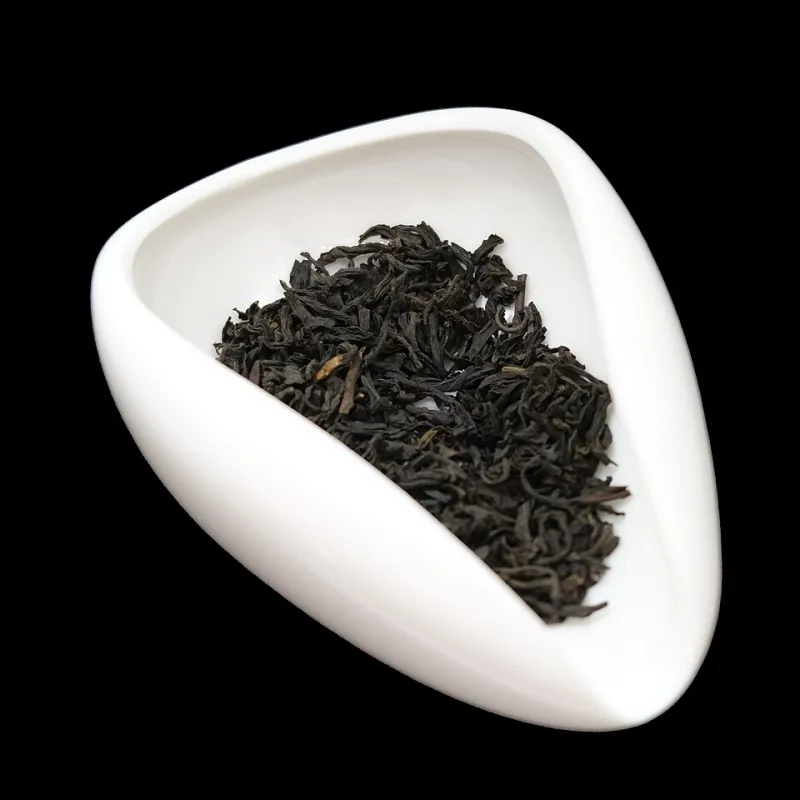
Photo: Ash Crow, CC BY-SA 4.0, via Wikimedia Commons
There is a moment, familiar to experienced tea drinkers, when the cup that seemed to promise only a single, satisfying experience reveals that it has more to say. The leaves, still warm and swollen in the pot, are not finished. They are, in fact, only beginning.
The practice of re-steeping premium loose-leaf tea — drawing multiple successive infusions from a single measured portion of leaves — is one of the great pleasures available to the home tea enthusiast. It is also one of the most misunderstood. Many American tea drinkers, accustomed to the single-use convenience of the tea bag, have never considered that a fine oolong or a carefully processed white tea might yield three, four, or even five distinct cups, each with its own personality and charm.
This guide is an invitation to slow down, pay attention, and allow a single tea purchase to become a multi-dimensional tasting experience.
Why Premium Leaves Reward Patience
The capacity of a tea to sustain multiple infusions is not a matter of luck. It is a function of leaf quality, processing method, and the physical structure of the tea itself.
High-quality loose-leaf teas are typically composed of whole or minimally broken leaves. These intact leaves release their soluble compounds — polyphenols, amino acids, aromatic oils, caffeine — gradually, over the course of successive steepings. A broken or dust-grade tea, by contrast, exposes the maximum surface area to water immediately, releasing most of its flavor potential in a single brew. This is why the tea bag, designed for speed and convenience, is largely a one-cup proposition.
The processing style also matters enormously. Lightly oxidized teas — white teas, green teas, and many oolongs — tend to be particularly well-suited to re-steeping because their flavor compounds are layered and complex, revealing different facets as the leaf gradually opens with each successive infusion. Heavily oxidized teas, such as robust Assams or Yunnan blacks, can also reward a second steep, though the character shift between infusions is often less dramatic.
Whole-leaf teas sourced from single estates — the kind one discovers when moving beyond commodity blends — are almost universally better candidates for re-steeping than blended or flavored varieties. This is one reason why investing in quality loose-leaf tea is, in practical terms, more economical than it might initially appear.
The Teas Best Suited to Multiple Infusions
High-mountain oolongs, such as Taiwan's celebrated Ali Shan or the cliff-grown Wuyi rock oolongs from China's Fujian province, are perhaps the most rewarding teas for multiple infusions. Their tightly rolled or twisted leaves unfurl progressively, releasing new aromatic dimensions with each steep. A well-processed Wuyi oolong may comfortably yield four to six distinct infusions.
White teas, particularly aged varieties or those composed of full buds such as Silver Needle (Baihao Yinzhen), are delicate on the first pour — subtle, honeyed, and almost ethereal — but often develop unexpected depth and sweetness by the second and third steeping.
Japanese green teas, including gyokuro and high-grade sencha, reveal grassy freshness in early infusions and a more savory, umami-forward character as steeping progresses. These teas demand particularly careful temperature management.
Pu-erh teas, both raw (sheng) and ripe (shou), are the endurance athletes of the re-steeping world. A quality aged pu-erh can sustain eight or more infusions, moving through earthy, woody, and even sweetly floral phases across an extended tasting session.
Temperature and Timing: The Essential Variables
Successful re-steeping requires attentiveness to two primary variables: water temperature and steeping duration.
A general principle holds that successive infusions benefit from a slight increase in water temperature, particularly after the third steep, as the leaf's remaining soluble compounds become progressively more resistant to extraction. For a delicate green tea that begins at 170°F, one might increase to 175°F or 180°F by the third infusion. Oolongs and white teas often tolerate a gradual move toward 190°F or even a brief full boil by later steeps.
Steeping time follows a complementary arc. The first infusion is typically brief — sometimes as short as thirty seconds for a gyokuro prepared in the gongfu style. Subsequent steeps extend incrementally: fifteen to thirty seconds added with each successive pour. This progressive approach compensates for the gradual depletion of readily soluble flavor compounds and ensures that each cup remains balanced rather than flat.
One practical note: allow the leaves to rest between infusions rather than leaving them submerged in residual water. Draining the vessel completely after each steep prevents over-extraction and preserves the leaf's remaining potential.
Pairing Pastries Across the Arc of a Tasting
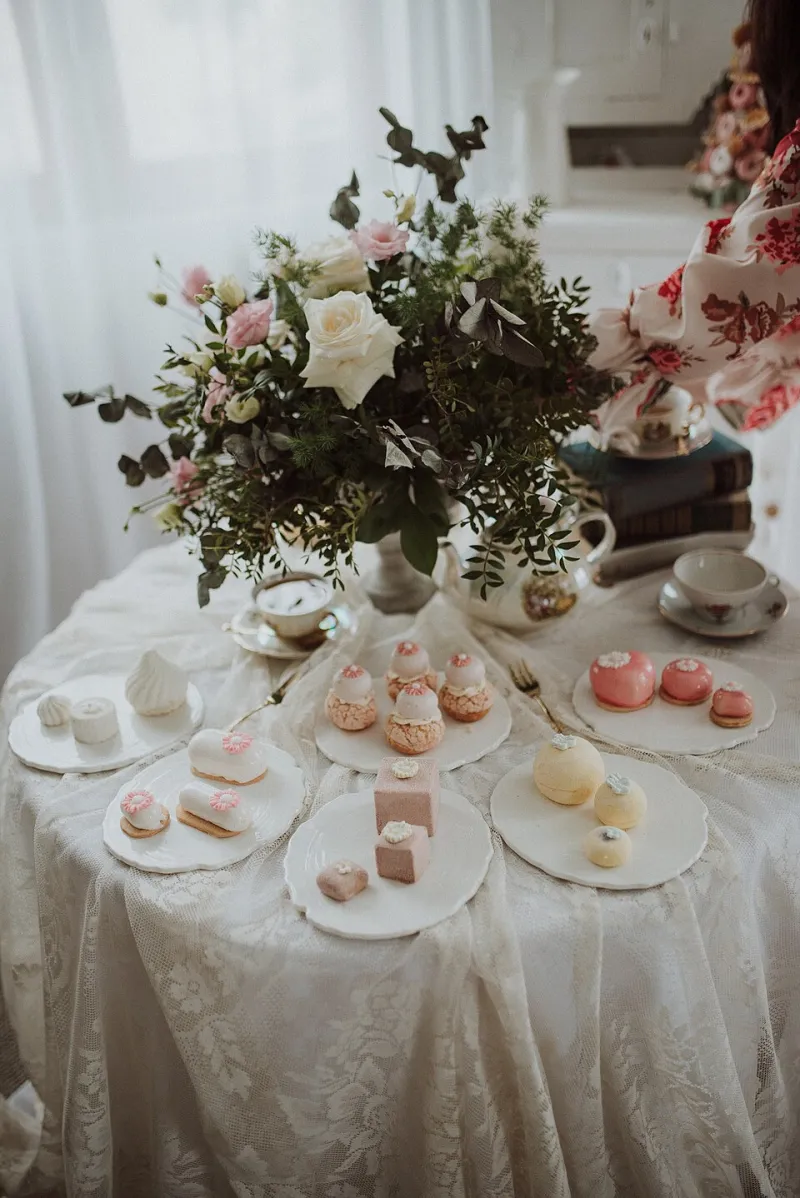
One of the most rewarding aspects of the multiple-infusion experience is the opportunity to pair each successive cup with a pastry that reflects — and complements — its evolving character. Because the tea's flavor profile shifts meaningfully between steeps, a thoughtfully chosen sequence of accompaniments can transform an afternoon tea session into something approaching a formal tasting menu.
The first steep of a high-mountain oolong is typically bright, floral, and lightly vegetal, with a clean finish. A fitting accompaniment is a delicate almond tuile or a thin, buttery shortbread dusted with a touch of lavender sugar. The pastry's restrained sweetness allows the tea's more volatile aromatics to assert themselves without competition.
The second steep deepens and softens. Floral notes give way to stone fruit — apricot, peach, sometimes a suggestion of lychee. Here, a small financier, golden and nutty from browned butter, provides a richness that mirrors the tea's increasing body without overwhelming its subtlety.
The third steep often reveals the most complex, lingering character: roasted undertones, a hint of mineral depth, a satisfying roundness on the palate. A slice of honey cake — dense, lightly spiced, and finished with a thin glaze — stands up beautifully to this fuller expression.
For those exploring the later steeps of a pu-erh, earthy and warming in character, a square of dark chocolate shortbread or a walnut-studded biscotti provides the structural weight and slight bitterness that such cups invite.
Building a Re-Steeping Practice at Home
Adopting a re-steeping practice requires no specialized equipment beyond what any serious loose-leaf tea drinker is likely to own: a quality teapot or gaiwan, a reliable kettle with temperature control, and an accurate measure of premium leaves. The investment is in attention and time.
Begin with a tea you already enjoy and approach the second steep with curiosity rather than expectation. Note whether the cup surprises you — and it very likely will. Keep a simple record of temperature, timing, and your impressions of each infusion. Over time, this practice cultivates the kind of sensory literacy that transforms tea from a daily habit into a genuine discipline.
At Tea & Pastries, we believe that the finest teas, like the finest pastries, reveal their full complexity only to those willing to be patient. The second steep is not an afterthought. It is, often, where the real conversation begins.