Curating Your Culinary Tea Pantry: A Sophisticated Approach to Thoughtful, Budget-Conscious Collecting
The Pantry as Philosophy
Every serious pastry kitchen harbors a quiet hierarchy of ingredients. There are the staples — flour, butter, eggs — and then there are the transformative accents that elevate a bake from competent to extraordinary. For the home baker who has discovered the remarkable depth that tea imparts to custards, creams, glazes, and laminated doughs, the question is no longer whether to maintain a tea collection, but how to build one that serves both the teacup and the mixing bowl without quietly emptying the wallet.
The good news is this: culinary-grade tea need not be ceremonial-grade expensive. What it must be, however, is deliberate.
Begin with Versatility, Not Volume
The most common mistake among newly enthusiastic tea collectors is breadth without purpose. A shelf crowded with forty varieties, most of which see use twice a year, represents neither sophistication nor economy. Instead, consider the concept of a working collection — a curated set of perhaps eight to twelve teas, each chosen for its culinary flexibility.
For the pastry kitchen specifically, the following categories earn their place reliably:
- A robust Assam or English Breakfast blend — its malty, full-bodied character infuses beautifully into milk-based custards and cream fillings, offering depth without dominating.
- A mid-range Darjeeling first flush — lighter and more floral, it pairs elegantly with stone fruit tarts and almond-based pastries.
- A quality gunpowder or Dragonwell green tea — grassy, clean notes complement citrus glazes and white chocolate ganaches with surprising precision.
- A lightly smoked Lapsang Souchong — used sparingly, it introduces a remarkable savory undercurrent to caramel sauces and chocolate-forward bakes.
- A chamomile or hibiscus herbal blend — both affordable and visually striking, these work exceptionally well in jellies, infused sugars, and poaching liquids for fruit-based pastries.
This foundational five covers the spectrum from bold to delicate, from black to herbal, and from everyday use to occasional flourish.
Where to Source Without Overspending
The American tea market has matured considerably over the past decade. What was once the exclusive province of specialty importers is now accessible through a far wider range of channels — and the discerning buyer can exploit this to considerable advantage.
Specialty online retailers such as Upton Tea Imports, Harney & Sons, and Arbor Teas offer consistent quality at price points that reward buying in modest bulk. Many carry tasting samples at minimal cost, allowing the home baker to evaluate a tea's culinary potential before committing to a larger quantity.
Asian grocery stores, particularly those in cities with established Chinese, Japanese, Korean, or South Asian communities, often stock high-quality loose-leaf teas at a fraction of the markup found in boutique tea shops. A reliable Dragonwell sourced from a well-stocked Asian market in any major American city will frequently outperform a comparably priced option from a trend-driven retailer.
Seasonal sales and end-of-harvest clearances represent another underutilized opportunity. Reputable online tea merchants occasionally discount older harvests — teas that remain entirely suitable for culinary applications even as their ceremonial window narrows.
One category to approach with measured skepticism: supermarket tea marketed with artisan-adjacent language. The packaging may suggest sophistication; the contents rarely justify a premium price.
Storage Is Not an Afterthought
A tea purchased wisely and stored carelessly is a tea wasted. The enemies of loose-leaf quality are well established — light, moisture, heat, and competing aromas — and the pastry kitchen, with its warm ambient temperatures and abundance of aromatic ingredients, presents a particularly challenging environment.
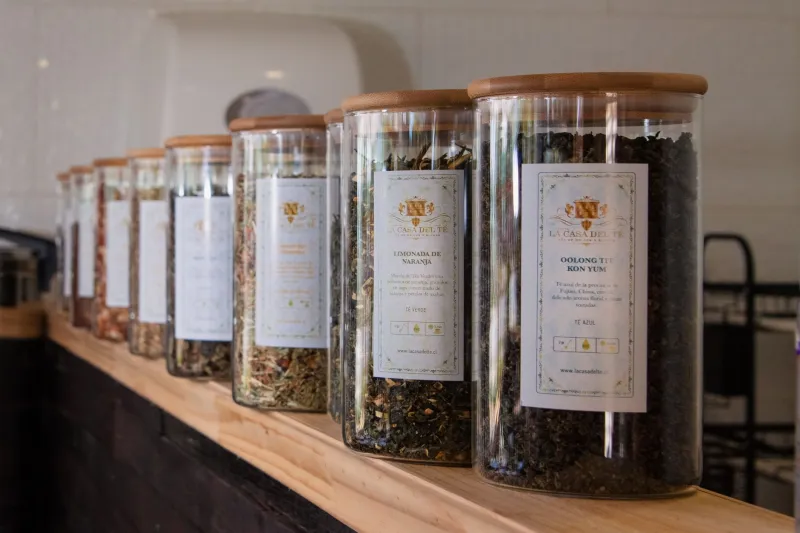
Invest in opaque, airtight tins or ceramic canisters with secure lids. Avoid clear glass containers displayed near windows, however aesthetically pleasing the arrangement may appear. Store your collection in a cool, dedicated drawer or cabinet, well away from the stove and any strongly scented spices.
Label each container not only with the tea's name but with its purchase date and recommended use-by window. Most green and white teas are best used within six to twelve months of purchase; robust black teas and oolongs can retain their culinary potency for eighteen months to two years when stored correctly. Herbal blends vary considerably — chamomile fades relatively quickly, while hibiscus maintains its color and tartness with admirable resilience.
Evaluating Flavor-to-Cost Ratio
For culinary purposes, the metric of value shifts meaningfully from that applied to ceremonial drinking. A tea that commands reverence in the gaiwan does not automatically translate to superior performance in a crème brûlée. The qualities that matter most in baking and pastry work are intensity, consistency, and compatibility with fat and sugar.
On these terms, mid-grade Assam and Ceylons offer exceptional value — their robust tannin structure survives the diluting effect of cream and butter far better than more delicate single-estate offerings. Conversely, a prized first-flush Darjeeling, while magnificent as a standalone brew, may surrender much of its nuance when steeped into a heavy custard base. Reserve your finest teas for the cup; deploy your reliable mid-range selections in the kitchen.
Matcha represents a special case. Culinary-grade matcha — explicitly labeled as such — is considerably less expensive than ceremonial-grade and performs identically, or better, in baked applications where its raw grassy edge is moderated by heat, fat, and sweetness. There is no culinary justification for using ceremonial matcha in a financier batter.
The Discipline of Restraint
Perhaps the most sophisticated quality a collector can cultivate is the willingness to resist acquisition for its own sake. Before purchasing a new tea, ask two questions: Does this fill a gap in my current collection? And have I exhausted the culinary possibilities of what I already possess?
A working tea pantry, thoughtfully assembled and conscientiously maintained, is not a static archive. It is a living toolkit — one that evolves with your baking practice, responds to seasonal inspiration, and rewards the patience of the intentional collector far more generously than any impulse purchase ever could.
Begin with the essentials. Master their applications. Then, and only then, expand with purpose.