Smoke Without Fire: The Case for Tea-Smoked Sugar in American Pastry Kitchens

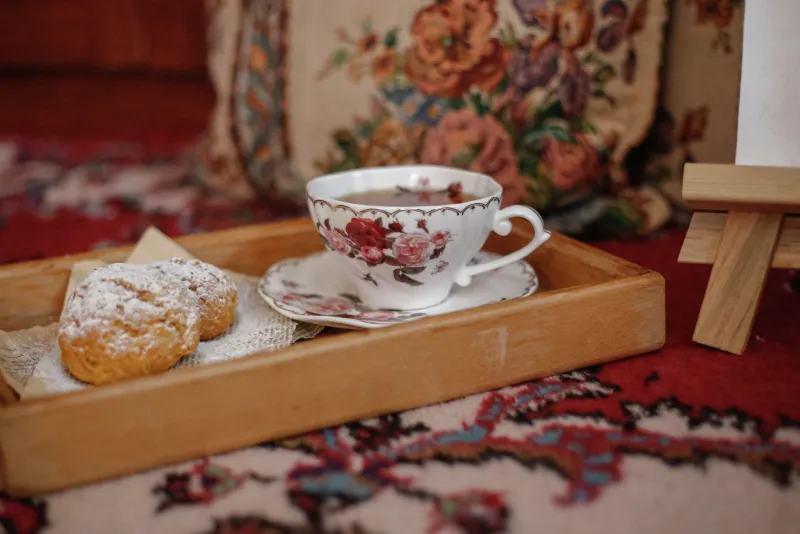
Photo: tea smoked sugar in glass jar with loose leaf tea and pastries on wooden table, via thumbs.dreamstime.com
Tea-smoked sugar is one of those quiet pantry projects that makes the rest of the pastry kitchen look more considered. It requires no smoker, no chamber vacuum, and no specialized ingredient beyond good loose-leaf tea. A home baker in a standard American kitchen can produce it with a heavy skillet, aluminum foil, and twenty minutes of attention. The result is sugar that carries the aromatic memory of tea smoke: cedar, dried fruit, cocoa, toasted grain, or pine, depending on the leaf. Used with restraint, it deepens caramel, custard, streusel, and finishing dusts without announcing itself as a trick.
Why Sugar Accepts Smoke So Readily
Granulated sugar is crystalline and low in moisture, which makes it an excellent blank surface for volatile aromatics. Demerara sugar, with its coarser grain and trace molasses, brings its own caramel notes and can hold smoke a little longer. The goal is not to coat sugar in soot or to make it taste like ash. The goal is to let tea smoke settle onto the crystals, where it remains until heat or moisture releases it. This is why tea-smoked sugar works best as a supporting flavor. In a caramel, it reads as depth. In a custard, it reads as a faint woodsy note behind vanilla. In a streusel, it makes butter taste more complex.
Choosing Teas That Smoke Well
Not every tea is a candidate. Delicate green and white teas tend to scorch before they release pleasing smoke, and their finer leaves can turn bitter. Start with teas that already have structure: lapsang souchong, a smoked black tea; hojicha, the Japanese roasted green tea; roasted oolong; and sturdy black teas with cocoa or malt notes. Lapsang souchong is the most assertive and should be used sparingly. Hojicha offers a gentler, toasted-cereal quality. A roasted oolong can bring stone fruit and woodsmoke in the same breath. Avoid teas heavily flavored with oils or candied fruit, which can gum up the sugar and leave a sticky, perfumed residue.
The Stovetop Method
For a small batch, line a wok or heavy skillet with heavy-duty aluminum foil. Scatter 1 to 2 tablespoons of loose-leaf tea over the foil. Set a wire rack or a ring of crumpled foil in the pan, then place a shallow heatproof bowl or foil tray of sugar on the rack. The sugar should sit in a thin layer, no more than half an inch deep. Cover the pan loosely with foil or a lid, leaving a small vent. Set the pan over medium-low heat. Within two to three minutes, the tea should begin to smolder and release smoke. Keep the heat low; burning tea produces acrid, tarry notes that will not improve with time. Let the sugar smoke for eight to ten minutes, then turn off the heat and leave the pan covered for another ten minutes. Uncover, cool completely, and break up any clumps.
The Oven Method
For a larger batch, heat the oven to 225°F. Spread the tea in a thin layer on a foil-lined sheet pan. Set a wire rack over the tea and place a shallow pan of sugar on the rack. Cover the entire assembly with foil, sealing the edges loosely. Bake for twenty-five to thirty minutes, then remove and let the sugar cool covered. The oven method is gentler and more even, but it requires a well-ventilated kitchen. Either way, do not walk away for long. Smoke that smells pleasant in the first five minutes can turn sharp by the fifteenth.
Ratios and Storage
A useful starting ratio is 1 tablespoon of loose-leaf tea per cup of granulated sugar, or about 5 grams of tea per 200 grams of sugar. For demerara, increase the tea slightly to 1½ tablespoons per cup. Lapsang souchong should stay at the lower end; hojicha and roasted oolong can handle a little more. Taste the sugar after it cools, not while it is warm. Warm sugar tastes sweeter and smokier than it will later. Store cooled sugar in an airtight glass jar in a cool, dark place. It will keep for about a month. If it clumps, press it through a fine sieve. Label the jar with the tea used and the date; smoked sugar is not interchangeable with plain sugar in every formula.
Where It Earns Its Keep
Use tea-smoked sugar in dry caramel, replacing no more than one-third of the plain sugar so the smoke stays in the background. In custard, whisk it into the base before heating and strain as usual. In streusel, replace half the granulated sugar and keep the butter cold. As a finishing dust, use it on galettes, shortbread, doughnuts, or the rim of a tart. For a finer finish, pulse smoked demerara with a small amount of cornstarch in a spice grinder, but do not smoke powdered sugar directly. The smoke should arrive as a suggestion, not a headline.
Common Pitfalls
The most common mistake is over-smoking. If the tea blackens, the batch will taste burnt. The second is moisture: let the sugar cool completely before sealing the jar, or condensation will turn it sticky. The third is using too much in a delicate custard. Start with a small replacement and build. Finally, ventilate the kitchen. Tea smoke is pleasant, but it lingers in curtains and upholstery. A window fan and an open window are not optional.
Tea-smoked sugar will not rescue a careless pastry, but it will make a careful one more memorable. It is a small project with a long reach, and it belongs in the American pastry kitchen for the same reason good tea belongs at the table: because restraint, when it is deliberate, tastes like luxury.